

Peptide Science 10 min read Sep 30, 2026
What are peptides? How they work and what to know before trying one.
One term can cover very different treatments. The specific peptide is what makes the science useful.
 Lauren HawkinsFounder & CEO · BSB, BSN, RN, CCRN
What are peptides? How they work, what they're used for, and what to know
Key takeaways
- Peptides are short chains of amino acids. Your body makes many of them naturally, where they act as signals involved in blood sugar regulation, appetite, and hormone activity.
- “Peptide” describes a type of molecule. Insulin, certain GLP-1 medications, collagen peptides, skincare ingredients, and newer injectable peptides can all fall under the term while working differently and carrying different levels of evidence.
- If you're considering peptide therapy, the specific peptide matters. So does its evidence, regulatory status, delivery method, source, and whether a clinician has considered it in the context of your health.
Peptides show up in places that seem unrelated: insulin, GLP-1 medications, collagen supplements, skincare, and increasingly, wellness clinics.
But sharing the ‘peptide’ label doesn’t make these products equivalent. They work differently, can be used for different purposes, and come with very different levels of evidence and oversight.
If you're looking into peptide therapy, those distinctions matter. In this blog, we'll look into how peptides work, where they're used, and what to consider before deciding whether one belongs in your care regimen.
What is a peptide?
A peptide is a short chain of amino acids, the same building blocks your body uses to make proteins.
Peptides are generally shorter, usually 2 to 50 amino acids, while proteins are longer chains folded into complex shapes.
An easy way to picture the difference is through language:
- Amino acids are the letters
- A peptide is a short word or phrase
- A protein is a much longer sentence with a more complex three-dimensional structure
Your body makes peptides all the time. Insulin, for example, is a peptide hormone involved in regulating blood sugar. Other naturally occurring peptides participate in appetite, pain signaling, immune activity, growth, and communication between cells.
Peptides can also be produced outside the body for use in medications, supplements, skincare products, and other applications.
How do peptides work?
Many peptides work as messengers: a signaling peptide binds to a matching receptor on a cell and sets off a chain of events inside it.
Think of the peptide as a key and the receptor as the lock. The key doesn't do the work itself; turning it engages the mechanism behind the door. What happens next depends on the peptide and the receptor involved.
Insulin signaling, for example, helps regulate how the body handles glucose. GLP-1 is another naturally occurring peptide involved in blood sugar, gastric emptying, and food intake. Certain medicines are designed to act on these same biological pathways.
The term 'peptide' tells you something about a molecule's structure. It doesn't tell you what the peptide does, whether it has been shown to produce a particular health benefit, or whether it is appropriate for you.
That requires looking at the specifics.
What are peptides used for?
Peptides are used across biology, medicine, supplements, skincare, and wellness. The evidence behind those uses varies considerably.
1. Normal biological functions
Your body uses endogenous peptides, meaning the ones produced inside the body, as signals.
They participate in processes including:
- Blood sugar regulation
- Appetite and digestion
- Hormone signalling
- Pain perception
- Immune responses
- Growth and tissue function
These peptides are part of normal human physiology rather than treatments.
2. Medications
Peptide-based medicines have been used for decades.
Insulin and certain GLP-1 medications are some of the best-known examples. These medications act on defined biological pathways and have been evaluated for specific medical uses.
An FDA-approved peptide medication should not, however, be treated as evidence that every peptide is effective or carries the same safety profile.
3. Supplements and skincare
Peptides also appear in consumer products.
Collagen peptides are sold as dietary supplements, while different peptides are used in topical skincare formulations. How these products are absorbed, what they do, and how strong the supporting evidence is can differ substantially from injectable peptide medications.
If improving skin health is one of your goals, our guide to improving skin health looks more broadly at the factors that can affect it.
4. Wellness and longevity care
Newer peptide therapies are also being explored for goals related to recovery, metabolic health, and healthy aging.
This is the category that deserves the most nuance.
Human evidence varies considerably between peptides, and some products discussed online have not been FDA-approved for human treatment. Early laboratory, animal, or mechanistic evidence also cannot automatically tell us whether a peptide will produce the same result in a person.
That's why evaluating the specific peptide and the evidence behind it matters more than asking whether peptides as a category “work.
Learn more about the potential benefits of peptide therapy and what the current evidence shows.
Types of peptide products: injectable, oral, and topical
How a peptide enters your body can affect where it acts, how much reaches its target, and what to keep in mind when you’re using it.
Type
How it works
Oral peptides
Peptides taken by mouth enter the digestive system. Many therapeutic peptides are readily broken down by stomach acid and digestive enzymes, although formulation and peptide structure can change how well a particular product is absorbed.
Topical peptides
These are applied to the skin and designed primarily for local use. Whether a peptide penetrates the skin and produces a measurable effect depends on the specific peptide and formulation.
Injectable peptides
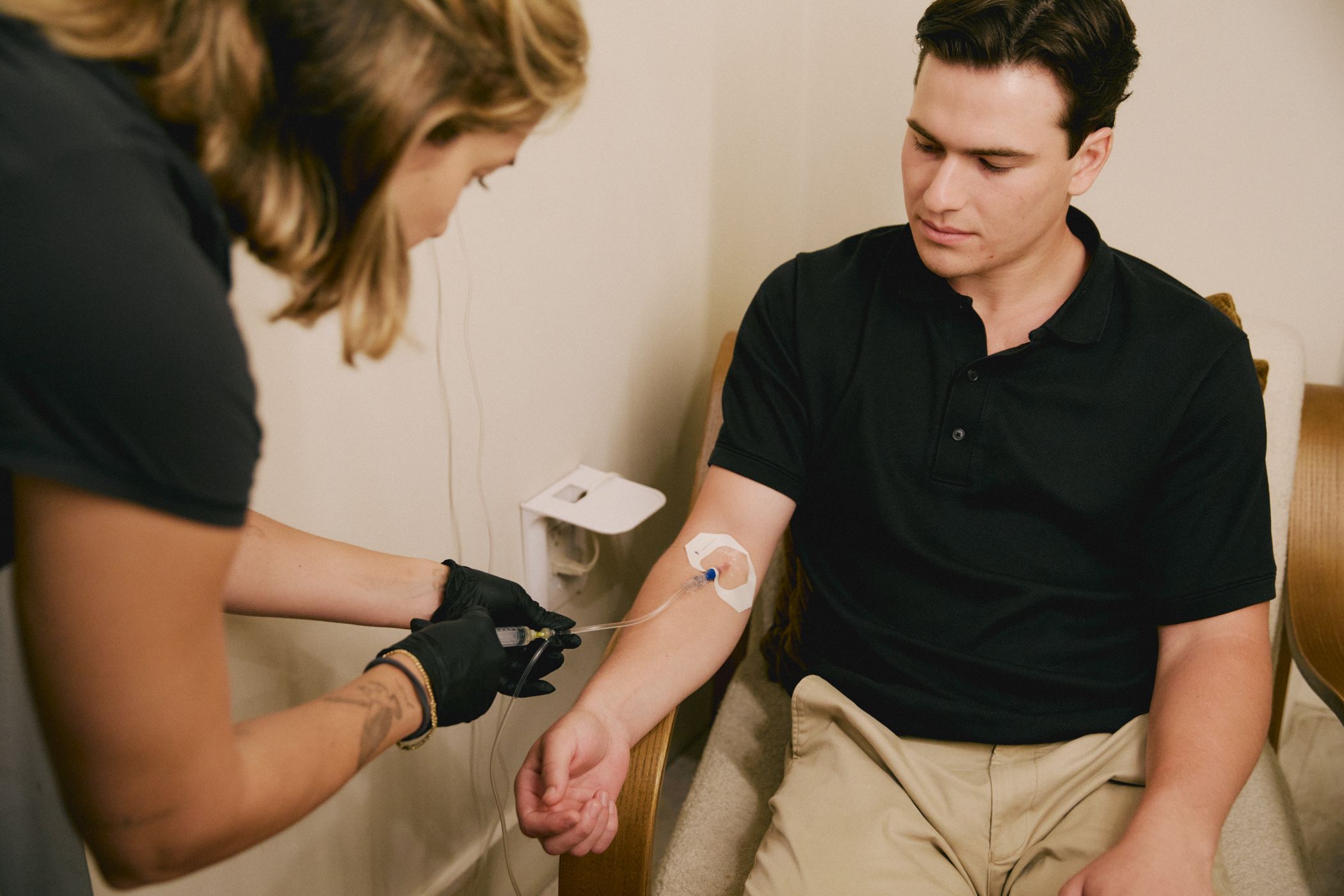
Injection bypasses the digestive tract, allowing the peptide to be absorbed from the injection site. Because the product enters the body directly, sterility, purity, storage, dose, and clinical oversight become particularly important.
This is why an injectable peptide cannot be evaluated in the same way as collagen powder or a peptide-containing face cream, even though all three use the word ‘peptide.’
Are peptides safe?
There isn't one safety profile that applies to every peptide. Before you begin any treatment, ask these questions:
- Which peptide is being used?
- What evidence exists for that specific use?
- Is it FDA-approved, compounded, or otherwise unapproved?
- How is it administered?
- Where does the product come from?
- What dose and formulation are being considered?
- How does it fit with your health history, medications, and other treatments?
FDA-approved medications have safety and effectiveness information tied to their approved uses and described in their prescribing information.
For other peptides, particularly newer compounded or unapproved injectable products, there may be substantially less human safety data.
Injection itself can also introduce risks such as injection-site reactions, while other potential side effects depend on the individual peptide and the pathway it affects.
The question, then, isn't simply “Are peptides safe?”
It's “What do we know about this particular peptide, in this form, for this person and this purpose?”
And that’s the question a clinician should help answer.
FDA-approved, compounded, and “research” peptides aren't the same thing
Regulatory status is one of the most important distinctions you need to understand when comparing peptide products.
FDA-approved peptide medications
An FDA-approved drug has been reviewed for its proposed use, including evidence related to safety, effectiveness, labeling, and manufacturing quality.
Approval applies to the specific drug and approved use. It doesn't extend to every product containing a similar peptide or to peptides as an entire category.
Compounded medications
Compounded medications are prepared by compounding pharmacies or outsourcing facilities under applicable federal and state requirements. However, compounded drugs are not FDA-approved.
Unlike an FDA-approved medication, a compounded drug does not go through the FDA's premarket review for safety, effectiveness, and quality.
Federal law also limits which bulk drug substances may be used by pharmacies and outsourcing facilities when compounding medications.
So, “compounded” describes how a medication is prepared. It does not mean the medication is FDA-approved.
Products labeled “for research use only”
You may also find injectable peptides online labeled “research use only” or “not for human consumption.”
Those labels do not turn a research product into an approved treatment for people. FDA has taken enforcement action against sellers marketing research-labeled peptides in ways that indicate they are actually intended for human use.
If you're considering a peptide for your health, a product being available to purchase online doesn't establish its quality, safety, or suitability for human treatment.
What should you look for in a clinician-guided peptide program?
If you're comparing doctor-guided or clinician-guided peptide treatments, start with the care process rather than the list of products available.
Look for a provider that can answer five questions clearly:
1. What exactly is being recommended?
You should understand whether the treatment is FDA-approved, compounded, or another type of product and how strong the evidence is for the goal you're discussing.
2. Who decides whether you're eligible?
A clinician should consider your health history, medications, goals, and other relevant information before recommending treatment.
3. Where does the medication come from?
Ask who prepares or dispenses the treatment and what standards apply. Be wary of language suggesting that a compounded medication or compounding pharmacy is “FDA-approved.” FDA does not approve compounded medications or designate pharmacies as FDA-approved or FDA-licensed.
4. What happens after treatment begins?
Peptide therapy shouldn't end at fulfillment. Understand what follow-up is included, how your response will be reviewed, and when a treatment plan would be reconsidered.
5. What does the price actually include?
When comparing online peptide therapy programs, look beyond the medication price. Check whether clinician review, consultations, testing where applicable, fulfillment, and follow-up are included or charged separately.
What to look for in peptide therapy
If you’re considering peptide therapy, look beyond access to the treatment itself. The quality of the care around it matters too.
At Arōe, peptide therapy is considered within the context of your broader health rather than as a standalone product you select from a menu.
Our approach follows three steps:
- Assess: An Arōe clinician reviews your goals, health history, and other relevant information to determine whether peptide therapy may fit your needs.
- Design: If peptide therapy is appropriate, your clinician considers how it fits within your broader care plan rather than following a one-size-fits-all protocol.
- Support: Ongoing care allows your clinician to review how you're responding and adjust your plan when appropriate.
Every therapy we dispense is prepared for human treatment and filled through licensed, accredited pharmacies, never research-grade compounds.
To learn more about the treatment itself, explore Arōe Health's peptide therapy. We offer in-person care at our SoHo flagship and concierge services in select locations.
That’s the difference a guided plan makes: you’re not left guessing which peptide makes sense for you. You’re working with someone who keeps the bigger picture in view and helps you find a path toward feeling like yourself again.
If you'd like to find out whether peptide therapy fits your goals and health history, start with a consultation today.
Frequently asked questions (FAQs):
Is Ozempic a peptide?
Ozempic contains semaglutide, a peptide-based medication that acts on the GLP-1 receptor. But that doesn’t make Ozempic representative of peptide therapy as a whole. Different peptides act on different biological pathways and can have very different uses, evidence, and safety profiles.
Are peptides like steroids?
No. Peptides and steroids are different types of molecules and work differently in the body. Peptides are made from amino acids and often work by interacting with specific receptors. Steroid hormones are derived from cholesterol and can enter cells to influence gene activity.
Some peptides and steroids may be discussed for similar goals, such as recovery or body composition, but that doesn’t make them interchangeable.
Can you get peptides naturally from food?
Yes. When your body digests protein-rich foods, it breaks proteins down into smaller peptides and amino acids. Peptides are also naturally present in some foods.
But eating peptide-containing foods is not equivalent to taking a peptide medication. Digestion, absorption, dose, and the specific peptide involved all affect what happens in the body.
What should you not mix with peptides?
There isn’t one list that applies to every peptide. Potential interactions depend on the specific peptide, your medications and supplements, and your health conditions.
Before starting peptide therapy, tell your clinician about any prescription medications, over-the-counter drugs, supplements, and other therapies you use. They can check for relevant interactions or reasons a particular treatment may not be appropriate.
Editorial disclosure
Editorial content is general information, not medical advice, and is not intended to diagnose, treat, cure, or prevent any disease. Prescription treatments are available only where a licensed clinician determines they are appropriate. Eligibility varies by state.